Crohn's disease and ulcerative colitis (UC) are the two main types of inflammatory bowel disease (IBD). Both involve ongoing inflammation in the digestive tract that can cause abdominal pain, diarrhea, urgency, fatigue and weight loss. When symptoms are moderate to severe, or other medicines haven't worked, gastroenterologists often turn to biologic therapies, many of which are given by infusion.
How biologics help in IBD
Biologics target specific parts of the immune response that drive gut inflammation. The goal is to calm symptoms, help the bowel heal and keep the disease in remission. They don't cure IBD, and results vary, but they have changed what many patients can expect from treatment.
Common infused therapies
- Entyvio (vedolizumab) works mainly in the gut, by keeping certain white blood cells from moving into the intestinal lining.
- Infliximab (Remicade and biosimilars such as Avsola, Inflectra and Renflexis) blocks TNF, a key inflammation signal.
- Stelara (ustekinumab) and Skyrizi (risankizumab) start with IV doses, then continue as injections under the skin.
Your gastroenterologist will recommend a therapy based on your diagnosis, where the inflammation is and how severe it is, your past treatments and your coverage.
What the schedule looks like
Most IBD infusions begin with starting doses given a few weeks apart, followed by maintenance infusions, often every eight weeks. Some patients may later switch to injections if their doctor and plan allow. Your care team will map out the dates.
Before you start
Expect screening for tuberculosis and hepatitis B, and a review of your vaccines. Because some biologics can raise infection risk, tell your care team about fevers, infections or upcoming surgery.
Iron deficiency anemia is also common in IBD. If your doctor orders IV iron, Infuse Care can give that too. Read more about iron deficiency anemia and what to expect from an iron infusion.
Living with IBD between infusions
- Keep a simple symptom log to share with your gastroenterologist.
- Don't skip or delay maintenance infusions without talking to your doctor, since gaps can affect how well some biologics keep working.
- Stay well hydrated, especially on infusion days.
IBD infusions in Toms River, NJ
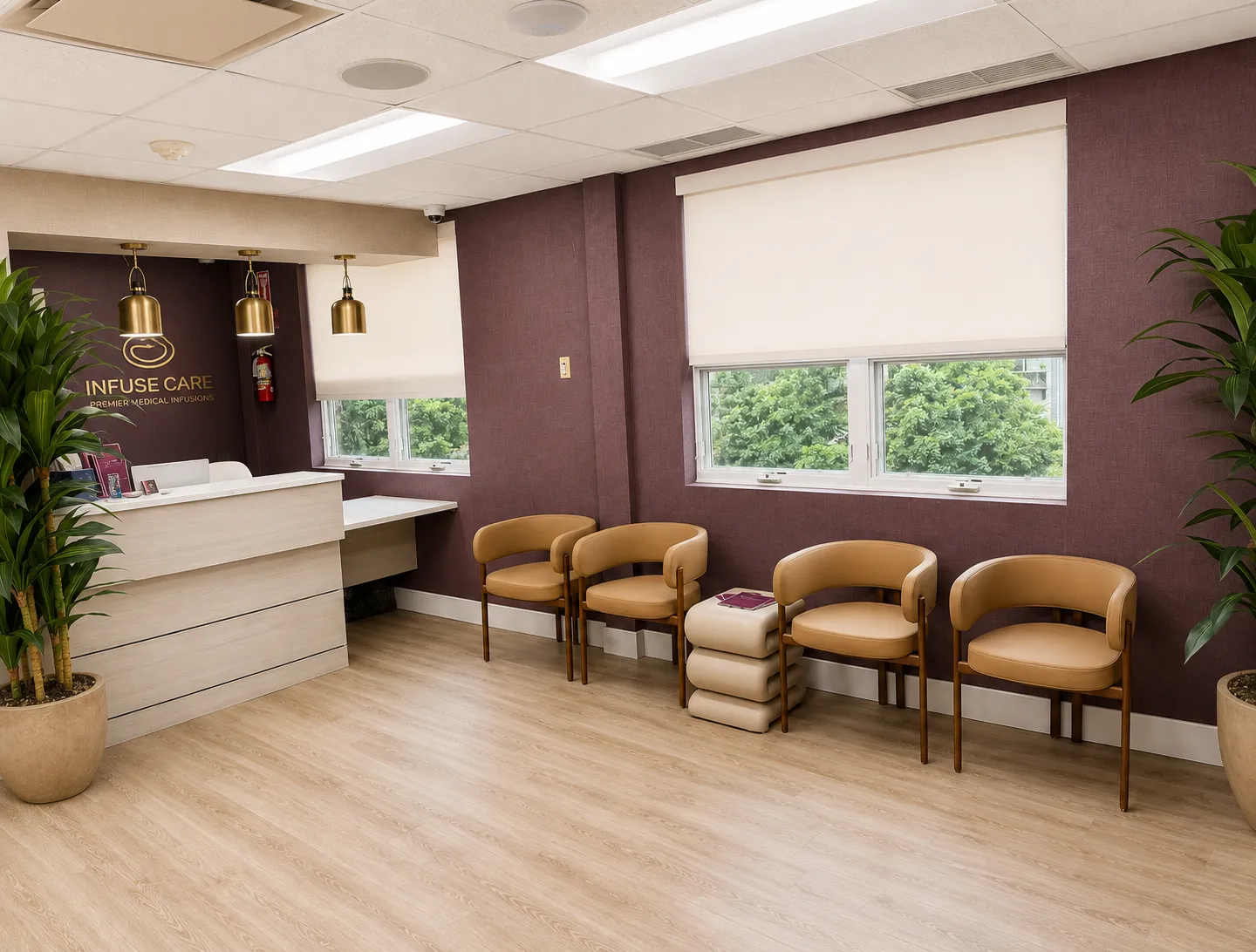
Infuse Care gives gastroenterologist-prescribed infusions in private suites, so you can rest comfortably and privately during treatment. Learn more about Crohn's disease, ulcerative colitis and our gastroenterology services, or call 732-444-8808.
Related specialty
This article is general information, not medical advice. Your doctor can help you decide what's right for your situation.